
Door Refinishing in Anacostia, DC
Expert historic wood door restoration and front door refinishing services. Serving Historic Anacostia, Fairlawn, Hillcrest, and Congress Heights with premium finishes designed to withstand the Anacostia River’s humidity and Washington’s seasonal weather swings.
Serving Anacostia and all of Southeast DC. Fast, local response.

Door Refinishing Washington DC Team
Senior Door Refinishing Specialists · Anacostia & Southeast DC Service Area
⏱ 13 min read · Published October 2026
Anacostia holds the largest collection of wood-frame buildings in Washington, and most of them still meet the street through a solid, panelled wood door that is older than anyone living behind it. Door refinishing in Anacostia is therefore less about cosmetics than about stewardship: stripping away decades of failed coatings, repairing what a river-valley climate has done to the wood, and sealing the door so it can serve another generation. Door Refinishing Washington DC brings that work to your porch with a mobile crew that restores the door on-site rather than selling you a replacement.
This page is the Anacostia chapter of our wider guide to door refinishing in Washington DC. It explains what makes the neighborhood’s doors distinctive, how the Anacostia River microclimate attacks an exterior finish, what the historic district rules do and do not ask of you, and how to get an accurate quote from a few phone photos. If you live in Historic Anacostia, Fairlawn, Hillcrest, Congress Heights or elsewhere east of the river, it was written for your front door.
Why Anacostia’s Historic Wood Doors Are Worth Restoring
Anacostia began in 1854 as Uniontown, one of Washington’s first suburbs, laid out for Navy Yard workers who could walk across the river to their shifts. The Anacostia Historic District, listed on the National Register of Historic Places in 1978, protects roughly 550 buildings from that first century of growth, dating from 1854 to about 1930. Most are modest two-story frame houses with front porches, and their entry doors were cut from dense old-growth lumber that is effectively unobtainable today. A door like that is not a consumable. It is the most handled piece of historic fabric on the house, which is why our wood door restoration services start from the assumption that the original should stay.
Cottage, Italianate and Washington Row Entry Doors
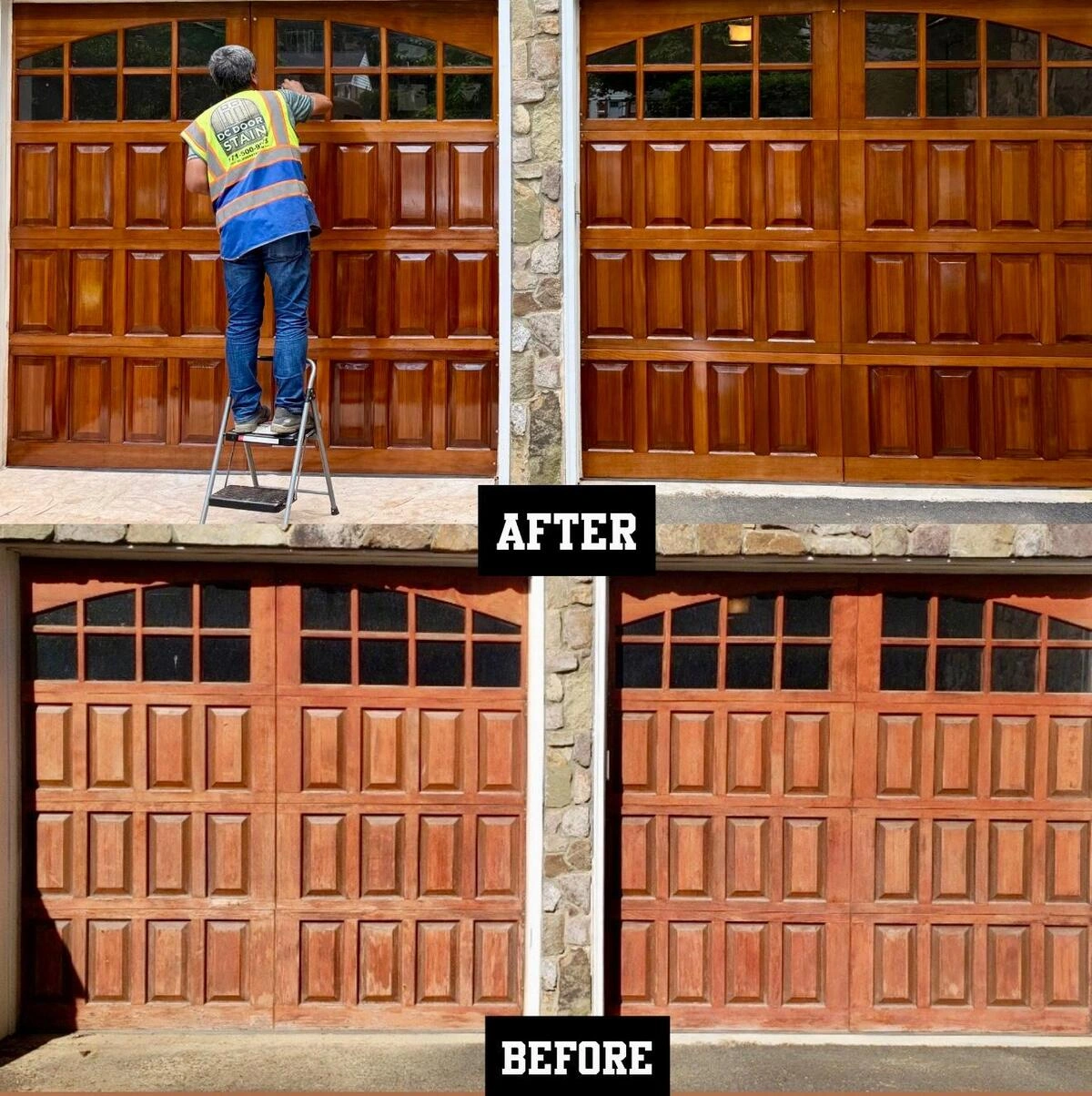
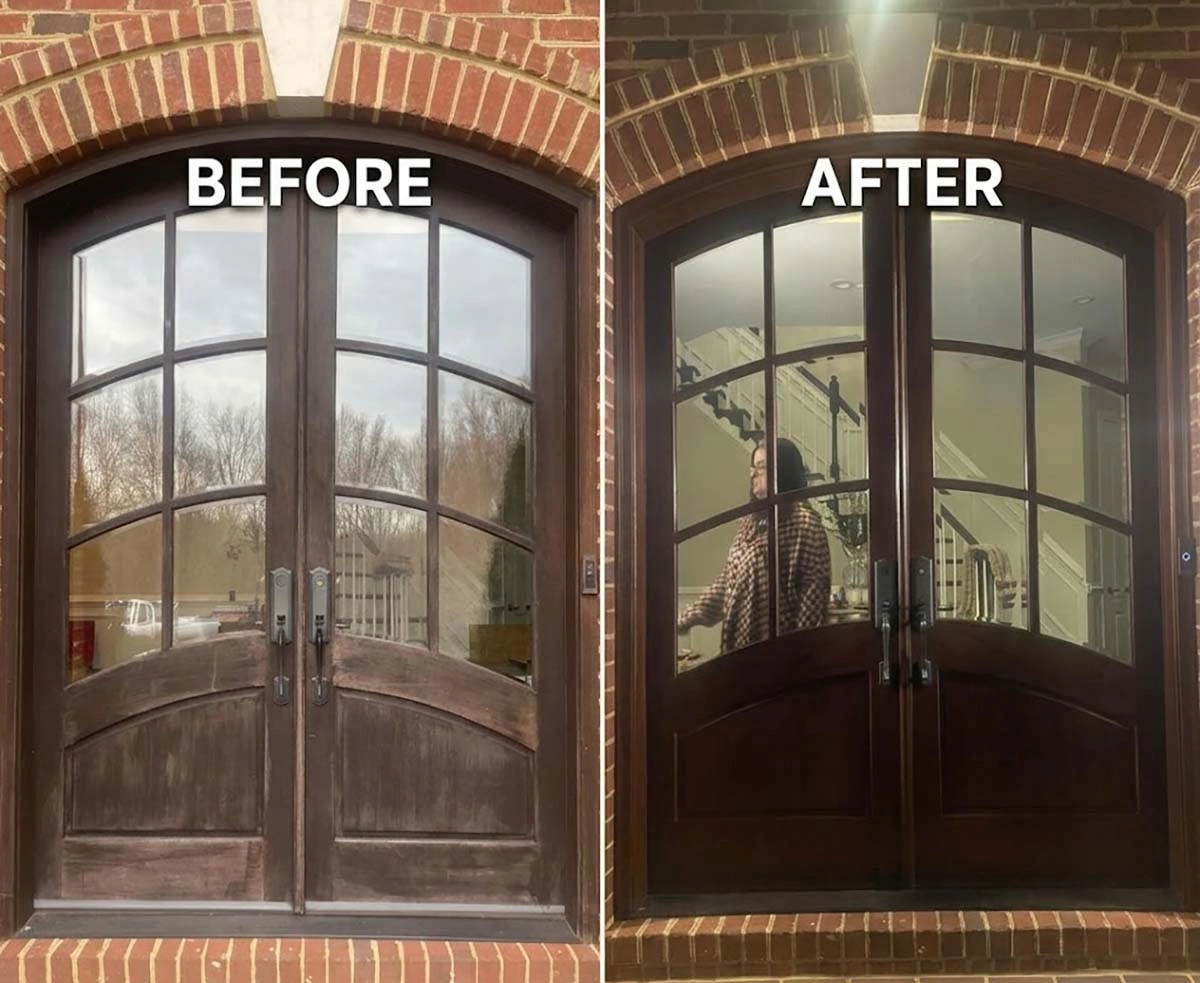
Three building styles dominate the district, and each carries its own door. Cottage-style houses, the earliest type, typically have a plain panelled door set beneath a porch roof. Wood-frame Italianate houses, popular from the 1870s onward, were built with wood doors of four to six panels, often paired with a transom. The later brick Washington Row houses, such as the fine group in the 1900 block of 13th Street SE, frame their doors with molded brick beneath corbelled cornices. The District’s design guidelines for Anacostia note that historic doors here generally had four or five panels, and that original doors, transoms and sidelights should be kept wherever possible. You can see how doors of this age respond to careful work in our before-and-after door gallery.
| House style | Typical entry door | Common condition | Refinishing approach |
|---|---|---|---|
| Cottage style (1850s–1880s) | Four-panel wood door under a full-width porch | Many paint layers, softened bottom rail | Strip to bare wood, repair the rail, then stain or period paint |
| Wood-frame Italianate (1870s–1900s) | Four- to six-panel wood door, often with a transom | Checked panels, loose mouldings, cloudy varnish | Hand-sanded mouldings, panel repair, multi-coat stain and UV varnish |
| Washington Row (brick, 1890s–1910s) | Panelled or part-glazed door in a molded brick surround | Sun-faded upper panels, tired glazing | Glass protected in place, matched stain, satin or gloss clear coat |
| Early 20th-century houses | Oak, fir or mahogany door, some with sidelights | Greyed, UV-bleached wood on exposed fronts | Full strip, conditioner, deep-tone stain, marine-grade seal |
What the Historic District Rules Mean for Your Front Door
Homeowners inside the district boundary often assume that touching a front door means paperwork. In practice the rules favour exactly the work we do. The District’s preservation law does not control paint colour, and routine maintenance such as painting or refinishing an existing door does not, as a rule, require a building permit, so it does not trigger historic review. Replacement is another matter. Swapping a street-facing door needs a permit that the Historic Preservation Office must clear, and the Anacostia guidelines steer owners toward wood, away from metal and vinyl, and away from stock doors with built-in fanlights.
Restoring the door you already own keeps you on the simple side of that line. If your property is an individually designated landmark, or if the project grows to include altering the opening, confirm the scope with the Historic Preservation Office before work begins. The people on our refinishing team can tell you where a job stops being maintenance and starts being an alteration.
How the Anacostia River Microclimate Affects Exterior Door Refinishing
Washington’s climate is hard on wood everywhere, but Anacostia’s topography concentrates the problem. The neighborhood climbs from low river flats beside Anacostia Park to the high ground around Cedar Hill and Fort Stanton. Doors on the lower streets sit in heavier, damper air that keeps a finish wet for longer after rain, while doors on the ridge take unbroken afternoon sun and wind-driven storms. Add humid summers, winter freeze-thaw cycles and spring pollen that clings to a tacky, failing varnish, and a finish that might survive elsewhere can fail early here. The regional picture is set out in our overview of DC, Virginia and Maryland service areas; the matrix below narrows it to conditions east of the river.
| Local condition | Where it bites | What it does to the door | How we counter it |
|---|---|---|---|
| River-valley humidity | Lower streets near Anacostia Park and the river flats | Swollen stiles, sticking doors, mildew under clear coats | Sealing every face and edge, including top and bottom |
| Afternoon sun | West- and south-facing fronts on the ridge toward Fort Stanton and Hillcrest | Bleached stain, cracked and peeling varnish | Three coats of UV-protected varnish over pigment-rich stain |
| Deep front porches | Cottage and Italianate houses across the historic district | Shaded lower half stays damp while the upper half fades | Even colour correction and extra care at the bottom rail |
| Freeze-thaw cycles | Any door with open joints or hairline cracks | Water enters, freezes and widens the split | Crack and joint repair before any stain goes on |
| Street dust and pollen | Homes along Martin Luther King Jr. Avenue and Marion Barry Avenue | Grit abrades a soft finish; pollen stains a tacky one | Hard-curing clear coat and a simple cleaning routine |
The porch deserves a second look, because nearly every historic house here has one. A porch roof shields the top of a door from rain, which is why so many Anacostia doors have survived at all. It also traps humid air against the lower panels and splashes rainwater back from the porch floor onto the bottom rail. The result is a door that looks tired at the top and is actually failing at the bottom, where a casual inspection rarely reaches. We check the bottom edge and the lower joints first on every site visit.
Communities directly across the water face the same river-driven humidity. The lessons in our guide to door refinishing in Alexandria’s Old Town, where historic doors stand a few blocks from the Potomac, apply equally on the Anacostia side.
Our Wood Door Refinishing Process for Anacostia Homes
Every project follows the same disciplined sequence, adapted to the age of the door in front of us. We bring the workshop to you. The door comes off its hinges, your entrance is secured with a temporary cover, and the work is done on-site so the door never rides across town in a truck. Most single doors are finished within one to two days, depending on condition and weather.
Stripping, Sanding and Repair for Old-Growth Wood
Old Anacostia doors often carry a century of coatings: varnish under paint under more paint. We remove them down to bare wood, then sand in stages so that panel mouldings keep their crisp edges instead of being rounded over by a machine. Houses built before 1978 may have lead-based paint in those lower layers, so we assess the existing coating before any aggressive sanding begins and plan the removal around what we find. It is one more reason not to hand a historic door to a general painter with an orbital sander.
Cracks, open joints and weathered bottom rails are repaired at this stage, because stain applied over damage only draws the eye to it. Old-growth pine and fir are forgiving to repair and reward the effort with tight, straight grain that modern lumber cannot match. Homeowners comparing approaches may find the row-house examples in our guide to door refinishing in Arlington useful.
Front Door Staining and Marine-Grade Sealing
Bare wood receives two coats of conditioner so the stain takes evenly, which matters on old softwoods that would otherwise blotch. Stain follows in three to five coats, built up to the depth of colour you chose, and is locked in with three coats of UV-protected varnish in a gloss or satin sheen. We use marine-grade stains and clear coats, the class of product made for boat brightwork, because a door a few blocks from a tidal river needs that level of protection.
The door is then rehung, checked for swing and latch, and inspected with you before we leave. A light maintenance coat each year keeps the system intact far longer than waiting for the finish to fail, and our door care blog covers cleaning and seasonal upkeep in more detail.
Door Refinishing Services Across Anacostia and Southeast DC
The same process serves very different doors. East of the river, a single afternoon of site visits can take in an 1880s cottage, a 1920s brick row house and a mid-century colonial with a mahogany entry, and each needs its own plan. The sections below set out what we refinish and where we work.
Front Door, Painted Door and Entry System Restoration
Front door refinishing is the core of our work, including the transoms, sidelights and frames that make up the full entry. Many historic Anacostia doors were painted over at some point in the last century. Where the wood beneath is sound, we can return a painted door to a stained finish; where earlier repairs make stain impractical, we prepare and repaint it to a furniture-grade standard instead. We also refinish interior doors and pocket doors, wood garage doors, and fiberglass, steel and iron doors, each with products suited to the material.
Churches and storefronts are part of the picture too. The commercial buildings along Martin Luther King Jr. Avenue and Marion Barry Avenue have recessed wood entries that take heavy daily use, and the neighborhood’s congregations look after some of the largest wood doors in Ward 8. Similar entry systems appear just over the District line, and we cover them in our guide to door refinishing in Prince George’s County, which takes in Oxon Hill, National Harbor and Fort Washington.
Neighborhoods We Serve Around Anacostia
Historic Anacostia is the centre of our work here, from the Italianate rows on U Street SE to the houses around the Frederick Douglass National Historic Site on W Street. To the north, Fairlawn’s porch-front row houses face the park and the river. On the high ground, Hillcrest, Penn Branch and Randle Highlands have detached twentieth-century homes with substantial hardwood doors that take the full afternoon sun. To the south, Congress Heights, Barry Farm, Fort Stanton, Buena Vista and Bellevue mix early frame houses with later brick, and the doors vary accordingly.
Our base at 1240 3rd Street NE is a short drive across the 11th Street Bridge, so scheduling east of the river is straightforward. The same crews work the opposite bank of the Potomac, where you can read about door refinishing in National Landing and Crystal City, and they continue door refinishing across Maryland for homeowners beyond Southern Avenue.
Door Refinishing Cost Factors in Anacostia
We do not publish a flat price, because two doors on the same block can need very different amounts of work. What we can do is show how projects sort into tiers, so you know where yours is likely to fall before you send photos. The condition of the wood, the number of old coating layers, and the presence of glass, transoms or sidelights decide most of the difference.
| Project tier | Typical door | Work involved | Relative investment |
|---|---|---|---|
| Maintenance refresh | Sound finish that has dulled | Clean, light abrasion, fresh protective coat | Lowest |
| Standard refinish | Faded or peeling finish over sound wood | Full strip, sand, condition, stain and three-coat seal | Moderate |
| Historic restoration | Multiple paint layers, damaged rails or panels, transom or sidelights | Full strip, wood repair, detailed moulding work, stain and seal | Higher |
| Multi-door project | Front and side doors, or a shared row-house frontage | Any of the above across several doors in one visit | Lower per door |
Timing affects value as much as scope. A door caught at the maintenance stage costs a fraction of one left until the bottom rail softens, and in a river neighborhood that window is shorter than most owners expect. Neighbors on a row often book together, which lowers the cost per door and keeps the frontage consistent. For a sense of how larger custom entries compare, see our notes on door refinishing in Montgomery County.
How a Door Refinishing Specialist Compares with the Alternatives
Most Anacostia homeowners weigh three options: a specialist, a general painter or handyman, and outright replacement. In a historic district the third option carries costs that do not appear on the invoice, from permit review to the loss of an original door that fitted its frame for a century. The comparison below sets them side by side.
| Factor | Door Refinishing Washington DC | General painter or handyman | Full door replacement |
|---|---|---|---|
| Original historic door | Kept and restored | Kept, often painted over | Lost |
| Historic review | Not triggered by maintenance refinishing | Not triggered | Permit and preservation review for street-facing doors |
| Surface preparation | Strip to bare wood, staged sanding | Scuff-sand and recoat | Not applicable |
| Finish system | Marine-grade stain, three coats of UV varnish | Retail exterior paint or polyurethane | Factory finish |
| Time on site | Typically 1–2 days | Varies | Lead time for custom sizes, then installation |
| Fit in an old frame | Original door, original fit | Original fit | Old openings rarely match stock sizes |
Door refinishing is all we do, and that focus is the real difference. The same crews handle door refinishing in Fairfax County on large suburban entries and restore waterfront doors described in our guide to wood door restoration for Chesapeake Bay homes, so the range of conditions they have seen is wide. Our wider work in door refinishing in Northern Virginia follows the same standard. Other local companies publish general door refinishing pages for the DC area; we have found none that addresses Anacostia’s frame houses, its porch-driven moisture pattern or its preservation guidelines, which is why this page exists.
Get a Free Door Refinishing Quote in Anacostia
A few clear photos are enough for an accurate first estimate. Send one of the whole door, one close-up of the worst area, and one of the bottom rail, and we will reply with an assessment, a recommended tier and available dates. Use the upload form below, or reach us through the contact page if you would rather describe the project first.
- Business: DC Wood Door Refinishing Restoration
- Address: 1240 3rd St NE, Unit 535, Washington, DC 20002
- Phone or text: +1 (571) 500-9876
- Hours: 9 AM – 8 PM, seven days a week
Free Door Refinishing Quote — Anacostia, DC
Upload photos of your door and we will reply with an assessment. Or call or text +1 (571) 500-9876, 9 AM – 8 PM daily.
What Customers Say About Our Door Refinishing
DC Wood Door Refinishing Restoration holds a 5.0-star rating from +100 reviews on its Google Business Profile. The three reviews below are quoted from that profile as written.
Hoordad Sharif, a Google Local Guide, wrote: “I was searching for the best door refinishing in DC to save my weathered entryway, and I’m so glad I found this team. They are hands-down the experts in wood door restoration. My front door staining looks incredible, the finish is smooth, durable, and completely transformed our home’s curb appeal.” He added that the crew was “professional, on time, and handled the entire sanding and sealing process on-site.”
Brooke Piercy wrote: “The response to my initial inquiry was quick, the quoting process was clear and fair, the craftsmen arrived on time, they knew the work that was to be done, the work was done with care and attention to detail, and the area was left safe and clean.” Her household had priced new fiberglass doors first: “after seeing our beautiful wood doors brought back to life, we know we made the right decision.”
Jacey Spratt wrote: “DC Wood Door Refinishing Restoration did an awesome job refinishing our front and side doors after 12 years without any maintenance. The company was responsive and scheduled/finished the work quickly and with supreme quality.”
Anacostia Door Refinishing FAQs
These questions come up on east-of-the-river projects specifically. For general questions about timing, materials and upkeep, see our general door refinishing FAQ.
Do I need historic approval to refinish a front door in the Anacostia Historic District?
Generally, no. Refinishing or repainting an existing door is routine maintenance, it does not normally require a building permit, and the District’s preservation law does not regulate paint colour. Replacing a street-facing door is different and goes through permit review by the Historic Preservation Office. If your home is an individually designated landmark, check with that office before any exterior work.
Can a painted historic door be returned to a stained wood finish?
Often, yes. We strip the paint to bare wood and assess what is underneath. If the wood is sound and earlier repairs are discreet, the door can be conditioned, stained and sealed. If old filler or mismatched patches would show through a clear finish, a high-quality repaint is the better choice, and we will tell you which applies before work starts.
My house was built before 1978. Is old paint on the door a concern?
It can be. Doors of that age may carry lead-based paint beneath later coats, and dry-sanding it is not something to attempt yourself. We evaluate the existing coatings at the start of every historic project and plan the removal accordingly. Tell us the approximate age of the house when you request a quote.
How does living near the Anacostia River affect maintenance?
Expect a shorter interval than a sheltered inland door would need. Humid air and porch splash work on the lower part of the door first. A quick look at the bottom rail each spring and a maintenance coat when the sheen starts to dull will prevent most full refinishing jobs.
Can you refinish a door without disturbing the transom and sidelights?
Yes. Glass is masked and protected in place, and the surrounding frame can be refinished to match so the whole entry reads as one piece. Original transoms and sidelights are among the features the Anacostia design guidelines ask owners to retain, so we treat them as part of the door.
Do you serve Fairlawn, Hillcrest and Congress Heights?
Yes. We work throughout Southeast DC east of the river, including Historic Anacostia, Fairlawn, Hillcrest, Penn Branch, Randle Highlands, Congress Heights, Barry Farm, Fort Stanton, Buena Vista and Bellevue.